
Choosing the right riding arena size is crucial for optimal equestrian performance and safety. A well-sized arena ensures proper training and competition conditions‚ catering to diverse disciplines and skill levels. Recent developments‚ such as vast all-weather arenas and Olympic-standard facilities‚ highlight the importance of precise measurements for enhancing rider and horse capabilities. This guide provides essential insights to help you make informed decisions.
1.1 Importance of Arena Size for Equestrian Activities
The size of a riding arena plays a critical role in ensuring the safety and performance of both horses and riders. Properly dimensioned arenas allow for adequate space to execute maneuvers‚ maintain rhythm‚ and avoid collisions. For disciplines like dressage and show jumping‚ precise measurements are essential to meet competition standards and enable accurate training. A well-sized arena also prevents horses from feeling confined‚ reducing stress and enhancing their ability to perform. Additionally‚ larger arenas‚ such as those spanning the size of two football pitches‚ provide ample room for high-level training and competition‚ regardless of weather conditions; Incorrect arena sizing can lead to limited movement‚ poor performance‚ or even safety hazards. Thus‚ understanding and selecting the right arena size is fundamental for creating an effective and safe equestrian environment.
1.2 Overview of Key Considerations
When determining the ideal riding arena size‚ several factors must be considered to ensure functionality and safety. The primary use of the arena‚ whether for training‚ competition‚ or recreational purposes‚ significantly influences its dimensions. Discipline-specific requirements‚ such as dressage or show jumping‚ also play a role in shaping the arena’s layout. The skill level of riders and horses is another critical factor‚ as novice riders may require more space to maneuver safely. Additionally‚ the available land and budget constraints must be evaluated to balance practicality with performance needs. Recent trends‚ such as the construction of Olympic-standard arenas‚ emphasize the importance of precise planning to accommodate high-level training. By addressing these considerations‚ equestrians can create arenas that are both efficient and conducive to achieving their goals.
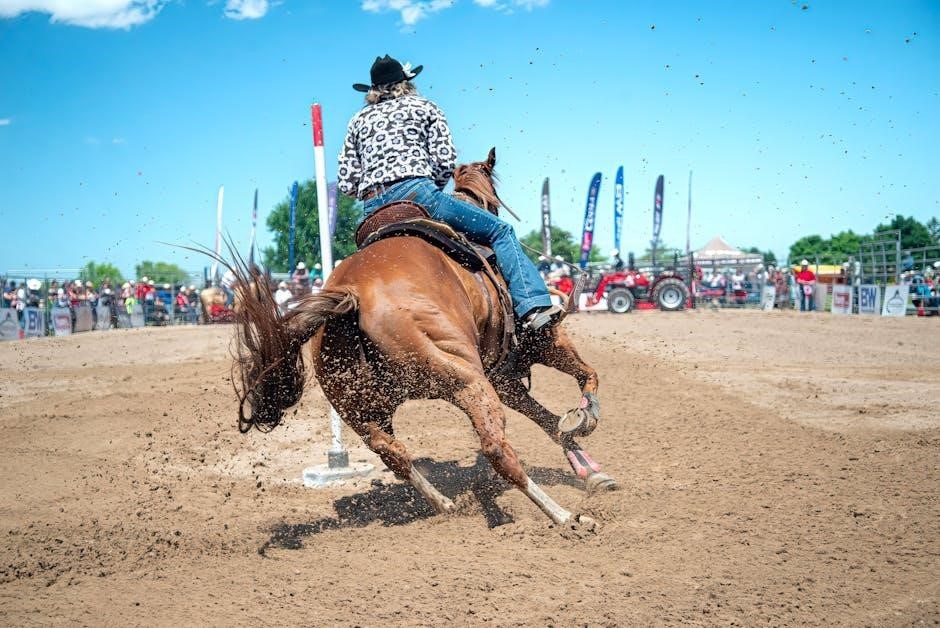
Standard Riding Arena Sizes
Standard riding arena sizes vary by discipline‚ ensuring optimal performance and safety. Dressage arenas are typically 60x20m‚ while show jumping arenas range from 50x70m. Western disciplines often use larger spaces‚ and mini arenas cater to limited areas‚ providing versatile training solutions for all equestrian needs.
2.1 Dressage Arena Dimensions
Dressage arenas are standardized to ensure precise movements and uniformity in competitions. The traditional dressage arena measures 60 meters long and 20 meters wide‚ providing ample space for intricate patterns and maneuvers. These dimensions allow horses to perform advanced movements like pirouettes and tempi changes comfortably. The arena’s size also accommodates the 10-meter margins required for safety and accurate judging. For smaller spaces‚ a 40×20-meter arena is often used for training purposes‚ offering a compact yet functional area. Recent developments‚ such as Olympic-standard arenas‚ emphasize the importance of precise measurements to meet international competition requirements. Adhering to these dimensions ensures consistency and fairness in equestrian events‚ making them essential for both training and competition environments.
2.2 Show Jumping Arena Measurements
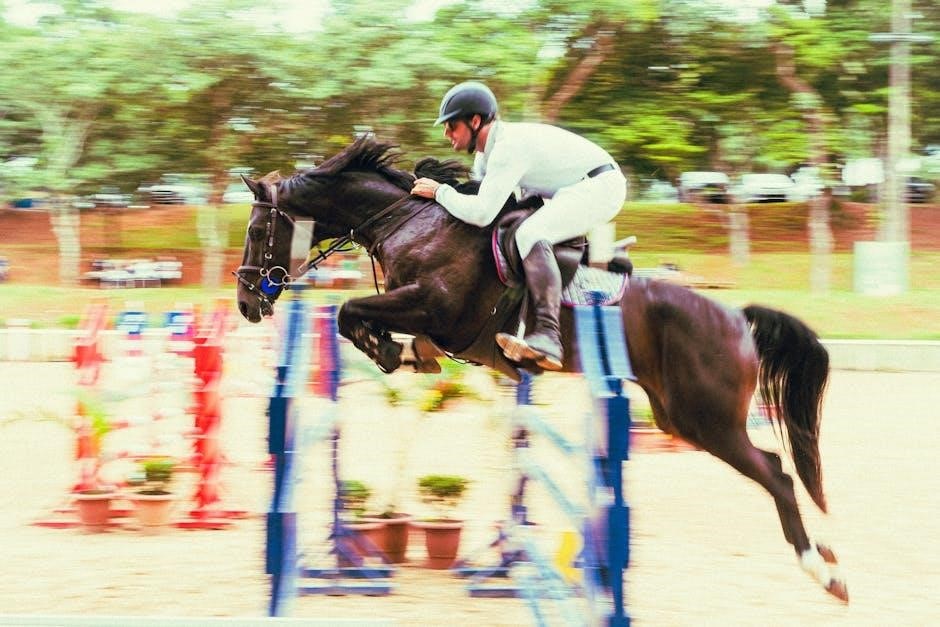
Show jumping arenas vary in size depending on the level of competition and the complexity of the course. Standard arenas typically range from 70 to 100 meters in length and 50 to 70 meters in width‚ providing ample space for jumps and clear runways. Smaller arenas‚ around 60×40 meters‚ are often used for training or lower-level competitions. The size ensures horses can achieve the required speed and stride length while navigating obstacles safely. For international events‚ such as Olympic competitions‚ arenas are larger‚ measuring up to 100×70 meters‚ to accommodate intricate courses and higher speeds. Proper arena dimensions are critical for ensuring fair competition and minimizing risks to both riders and horses. The measurements also allow for adequate safety margins and clear visibility for judges and spectators.
2.3 Western Discipline Arena Sizes
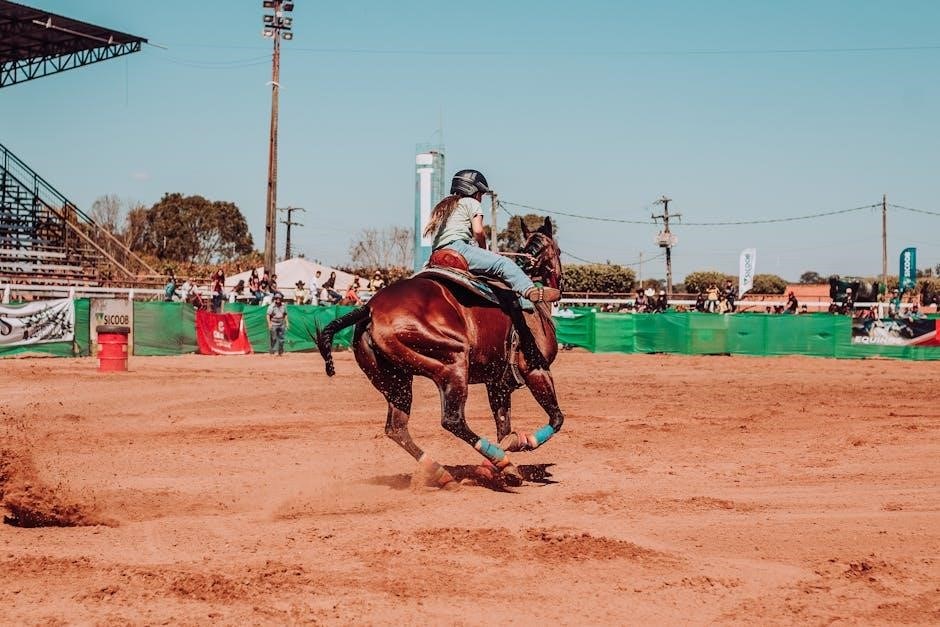
Western discipline arenas are typically larger than dressage arenas but slightly smaller than show jumping arenas‚ accommodating events like reining‚ barrel racing‚ and team roping. Standard sizes range from 100 to 150 feet in width and 200 to 300 feet in length‚ providing ample space for high-speed maneuvers and quick turns. The size may vary depending on the specific discipline‚ with reining requiring more open space for spins and slides‚ while barrel racing can function in a more compact setup. Team roping and working cow horse events often need additional room for cattle handling. The arena size ensures horses can move freely and safely‚ with enough space to perform intricate patterns and high-speed transitions. Proper dimensions are essential for optimizing performance and safety in Western disciplines‚ making arena size a critical factor for both training and competition.
2.4 Mini Arena Dimensions for Small Spaces
Mini arenas are ideal for horse owners with limited space‚ offering a practical solution for training and exercising. Typically‚ these compact arenas measure between 50 to 70 feet in width and 100 to 120 feet in length‚ providing enough room for basic movements and small-scale training. They are perfect for dressage work‚ simple jumping exercises‚ or daily horse exercises. Despite their smaller size‚ mini arenas can be highly functional‚ allowing riders to practice essential skills without requiring large open areas. For those with restricted land‚ these dimensions strike a balance between usability and space efficiency. Additionally‚ mini arenas can be customized with movable jumps or cones to create varied training scenarios. This makes them a valuable asset for riders seeking to improve their skills in a more manageable environment. Mini arenas prove that even in smaller spaces‚ effective horse training is achievable.
Factors Influencing Arena Size
Arena size is shaped by intended use‚ rider skill levels‚ and available space. Disciplines like dressage require precise dimensions‚ while show jumping needs ample room for courses. Budget and land constraints also play a significant role in determining the final size‚ ensuring functionality without compromising safety or performance. Proper planning balances these factors to create an optimal training environment.
3.1 Intended Use of the Arena
The intended use of the arena is a critical factor in determining its size. Different equestrian disciplines require specific dimensions to ensure safety and performance. For example‚ dressage arenas must adhere to precise measurements to accommodate intricate maneuvers‚ while show jumping arenas need ample space for course layouts. Western disciplines‚ such as reining or barrel racing‚ may require larger areas for high-speed movements. Additionally‚ arenas used for training young horses or novice riders may need extra space to allow for mistakes and gradual skill development. The primary function of the arena‚ whether for competition‚ training‚ or recreational use‚ directly influences its design and size. Understanding the intended purpose ensures the arena meets the needs of both riders and horses‚ fostering effective training and competition environments.
3.2 Skill Level of Riders and Horses
The skill level of riders and horses significantly impacts the ideal arena size. Novice riders and young or inexperienced horses benefit from smaller‚ more contained spaces‚ which reduce intimidation and allow for better control. As riders and horses progress‚ larger arenas accommodate advanced maneuvers and higher speeds. For instance‚ intermediate riders practicing show jumping or dressage require more room to execute complex patterns and jumps safely. Advanced riders engaged in high-speed disciplines‚ such as barrel racing or reining‚ need ample space to perform sharp turns and quick changes in direction. The arena size must align with the skill level to ensure safety‚ prevent accidents‚ and promote effective training. Balancing the space with the abilities of both rider and horse is essential for optimal performance and progression in equestrian activities.
3.3 Available Space and Budget Constraints
Available space and budget are critical factors in determining the size of a riding arena. Larger properties can accommodate expansive arenas‚ enabling high-level training and competition‚ as seen in recent developments like all-weather arenas spanning two football pitches. However‚ limited land or financial resources often necessitate smaller‚ more practical designs. Budget constraints influence material choices‚ such as selecting cost-effective surfaces or fencing options. Despite these limitations‚ thoughtful planning can create functional arenas that meet specific needs. For instance‚ smaller arenas can still support disciplines like dressage or western riding with careful design. Balancing space and budget ensures the arena remains functional‚ safe‚ and aligned with its intended use‚ even on a smaller scale. This approach allows equestrians to train effectively without compromising on essential features.
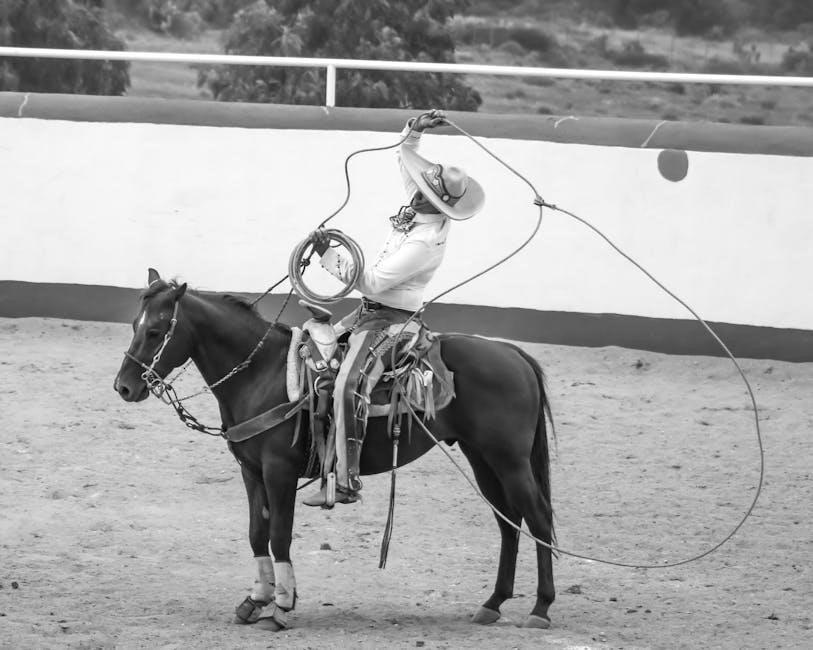
Design and Layout of Riding Arenas
Designing a riding arena involves planning for performance and safety. The layout should fit its use‚ whether training‚ competition‚ or specific disciplines. Recent all-weather and Olympic arenas demonstrate how design maximizes functionality and safety.
4.1 Optimal Shape for Performance
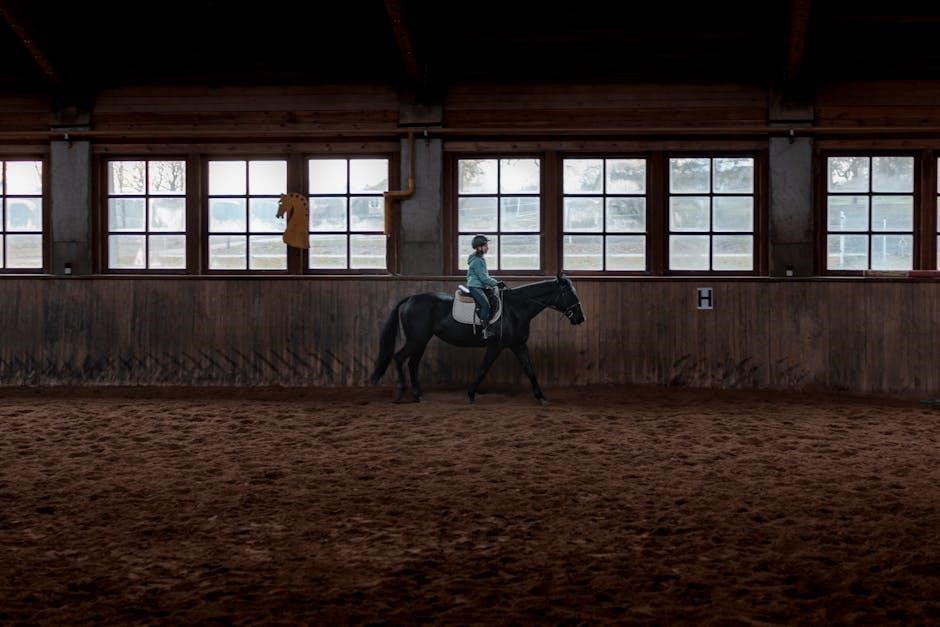
The shape of a riding arena plays a significant role in ensuring optimal performance for both riders and horses. Rectangular and oval shapes are the most common due to their ability to accommodate various equestrian disciplines. A rectangular arena provides clear boundaries and consistent distances‚ making it ideal for dressage and show jumping. Oval arenas‚ while less common‚ offer smoother transitions during turns‚ reducing the risk of injury to horses. The size and shape should align with the intended use‚ as smaller arenas may restrict movement for high-speed activities like show jumping. Recent developments‚ such as vast all-weather arenas‚ highlight the importance of shape in enabling year-round training and competition. Properly designed arenas ensure safety‚ performance‚ and versatility for all equestrian needs.
4.2 Fencing Requirements
Fencing is a critical component of riding arena design‚ ensuring safety and containment for horses and riders. The ideal fencing material should be durable‚ visible‚ and sturdy enough to withstand potential impact. Wood‚ PVC‚ or metal rails are popular choices‚ with heights typically ranging from 1.2 to 1.5 meters. The spacing between rails should be narrow enough to prevent horses from getting injured or escaping. Fencing also serves to guide horses and define the arena’s boundaries clearly. Visibility is key‚ so bright colors or reflective materials can enhance safety. Gates should be wide and secure to accommodate horse trailers and equipment. Proper fencing not only protects but also contributes to the overall functionality and aesthetic appeal of the arena. Ensuring fencing meets these criteria is essential for a safe and effective equestrian training environment.
4.3 Drainage and Surface Considerations
Proper drainage and surface quality are vital for a functional and safe riding arena. The surface should be even‚ well-draining‚ and provide adequate traction to prevent injuries. A slight incline or gradient can help direct water away‚ reducing the risk of puddles. Materials like sand‚ rubber‚ or a mix of aggregates are popular for their cushioning and drainage properties. Regular maintenance‚ such as raking and watering‚ ensures the surface remains consistent. For outdoor arenas‚ natural drainage systems or installed pipes can manage water flow effectively. Indoor arenas may require advanced drainage solutions to handle foot traffic and equipment use. A well-designed surface not only enhances performance but also protects horses’ joints and hooves‚ making it a critical factor in arena construction and upkeep.
Materials and Construction
Constructing a riding arena requires durable materials like steel for frames and high-quality surfaces such as sand or rubber for optimal performance and safety‚ ensuring longevity and functionality.
5.1 Choosing the Right Surface Material
Selecting the appropriate surface material for your riding arena is vital for horse welfare and performance. Common options include sand‚ rubber‚ and synthetic surfaces‚ each offering unique benefits. Sand provides excellent drainage and cushioning‚ while rubber enhances traction and durability. Synthetic surfaces mimic natural turf‚ offering a consistent and low-maintenance option. The choice depends on the intended use‚ climate‚ and budget. For high-level competition‚ materials like wax-coated sand or premium rubber are recommended for optimal performance. Proper material selection ensures safety‚ comfort‚ and longevity of the arena‚ making it a critical decision in the construction process. Recent trends include eco-friendly options‚ such as recycled rubber‚ which combines durability with environmental sustainability. Always consider local conditions and expert recommendations when making your final decision.
5.2 Base Layer and Foundation Requirements
A sturdy base layer and foundation are essential for a riding arena’s longevity and performance. The base layer‚ typically made of compacted gravel or limestone‚ ensures proper drainage and stability. It should be 4-6 inches thick‚ depending on the surface material chosen. A well-designed foundation prevents waterlogging and maintains evenness‚ crucial for horse and rider safety. The subgrade beneath the base layer must be level and compacted to support the weight of horses and riders. Proper installation prevents settling or shifting‚ which can lead to uneven surfaces. Regular inspections and maintenance are vital to uphold the integrity of the base and foundation. A poorly constructed base can lead to premature wear and safety hazards‚ making it a critical component of arena construction. Consulting professionals ensures a durable and functional foundation tailored to your specific needs and climate conditions.
5.3 Lighting for Indoor and Outdoor Arenas
Proper lighting is essential for both indoor and outdoor riding arenas to ensure visibility and safety during training and competitions. Indoor arenas require bright‚ even lighting to simulate natural conditions‚ with LED lights being a popular choice for their energy efficiency and durability. Outdoor arenas need floodlights that provide adequate illumination without causing glare. The lighting system should be designed to minimize shadows and ensure uniform brightness across the arena. For indoor facilities‚ lighting should be installed at a height that prevents direct glare in riders’ eyes. Outdoor lighting should be positioned to avoid obstructing neighboring properties or causing light pollution. Professional installation is recommended to meet safety standards and ensure optimal performance. Proper lighting enhances the overall riding experience and is a critical component of arena design and functionality.
Maintenance and Upkeep
Regular arena maintenance ensures safety and longevity. Tasks include inspecting fences‚ replenishing footing materials‚ and drainage checks. Consistent upkeep prevents hazards and maintains optimal riding conditions for all users.
6.1 Regular Maintenance Tasks
Regular maintenance is essential to ensure the riding arena remains safe and functional. Key tasks include inspecting and repairing fences‚ checking drainage systems‚ and maintaining the surface material. For outdoor arenas‚ clearing debris and managing vegetation are crucial. Indoor arenas require consistent cleaning and dust control to prevent respiratory issues for horses. Additionally‚ regular grooming of the footing material‚ such as sand or rubber‚ helps maintain evenness and traction. It’s also important to monitor the arena’s lighting‚ especially for indoor facilities‚ to ensure adequate visibility during training and competitions. By staying on top of these tasks‚ riders can prevent potential hazards and extend the lifespan of their arena.
6.2 Safety Inspections
Regular safety inspections are vital to ensure the riding arena remains a secure environment for both riders and horses. Inspect the fencing‚ gates‚ and lighting to identify potential hazards. Check for loose or damaged fencing‚ as these can pose risks during training or competitions. Ensure gates are sturdy and properly secured to prevent unexpected openings. Lighting should be adequate‚ especially in indoor arenas‚ to provide clear visibility; Inspect the arena surface for unevenness or debris that could cause slips or trips. Regularly check the condition of jumps‚ poles‚ and other equipment to ensure they are stable and safe. Addressing these issues promptly helps prevent accidents and maintains a safe training environment. Safety inspections should be conducted daily before use and more thoroughly on a weekly basis to uphold high standards of safety and performance.
6.3 Cost Considerations
Cost considerations play a significant role in designing and maintaining a riding arena. The size‚ materials‚ and features of the arena directly impact expenses. Larger arenas require more resources‚ while smaller ones can be more budget-friendly. Surface materials‚ such as high-quality sand or rubber‚ can increase initial costs but provide long-term benefits. Lighting for indoor arenas adds to construction and energy expenses. Regular maintenance‚ including surface renewal and fence repairs‚ should be factored into annual budgets. Budget constraints may influence design choices‚ such as opting for basic fencing over decorative options. Planning carefully helps balance quality and affordability‚ ensuring the arena meets functional needs without exceeding financial limits. Understanding these cost factors is essential for creating a practical and sustainable riding space.
Proper arena sizing is vital for safety‚ performance‚ and enjoyment. Consider future needs‚ budget‚ and maintenance costs to create a functional‚ long-lasting space for equestrian activities.
7.1 Summary of Key Points
The riding arena size guide emphasizes the importance of proper measurements for various equestrian disciplines‚ ensuring safety and performance. Dressage‚ show jumping‚ and Western disciplines each require specific dimensions to accommodate maneuvers and equipment. Factors like intended use‚ rider skill levels‚ and available space significantly influence arena sizing. Mini arenas offer practical solutions for limited areas. Optimal shapes‚ fencing‚ and surfaces are crucial for functionality and safety. Regular maintenance‚ including drainage and surface upkeep‚ ensures longevity. Budget constraints and long-term costs must be considered. By adhering to these guidelines‚ equestrians can create arenas that meet their needs while providing optimal conditions for training and competition. Proper planning and execution are essential for a successful and durable riding arena;
7.2 Final Recommendations
When designing a riding arena‚ prioritize size and functionality based on intended use and discipline requirements. Ensure measurements align with standards for dressage‚ show jumping‚ or Western disciplines. Consider skill levels of riders and horses‚ as well as available space and budget. Opt for durable‚ high-quality materials for surfaces and fencing to enhance safety and longevity. Regular maintenance is crucial to uphold performance and safety standards. Invest in proper drainage systems to prevent waterlogging and extend the arena’s lifespan. For smaller spaces‚ mini arenas can be a practical solution without compromising functionality. Lastly‚ consult professionals to tailor designs to specific needs and ensure compliance with equestrian regulations. By following these guidelines‚ you can create an arena that supports optimal training‚ competition‚ and horse welfare for years to come.